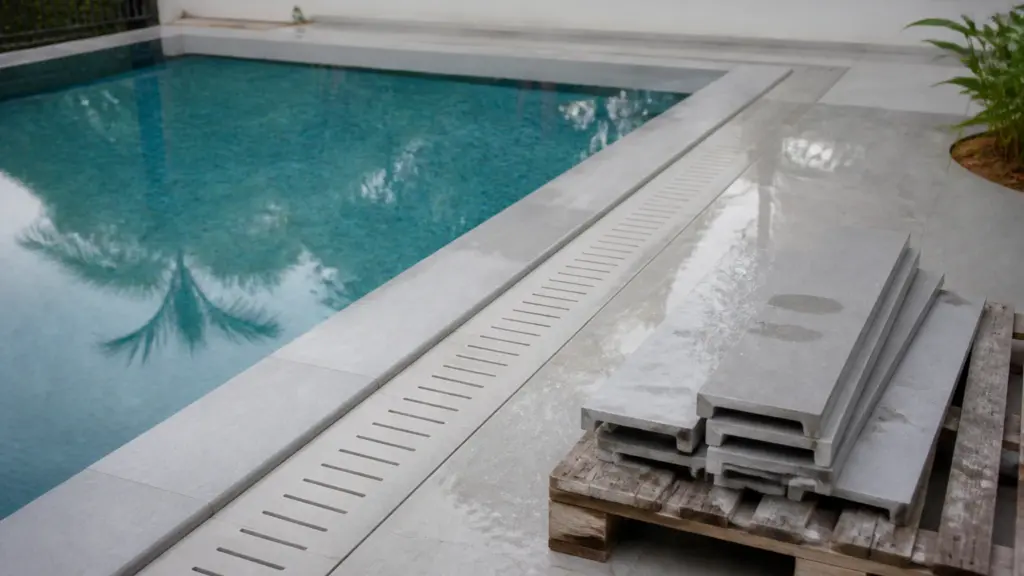

Many pool owners notice problems at the water’s edge long before they notice them anywhere else. Cracked joints, slippery surfaces, loose caps and water pooling on the ledge are common complaints. Most of them trace back to the coping, the cap that finishes the top of the pool wall. Understanding what it does makes it easier to choose, repair or replace it with fewer surprises.
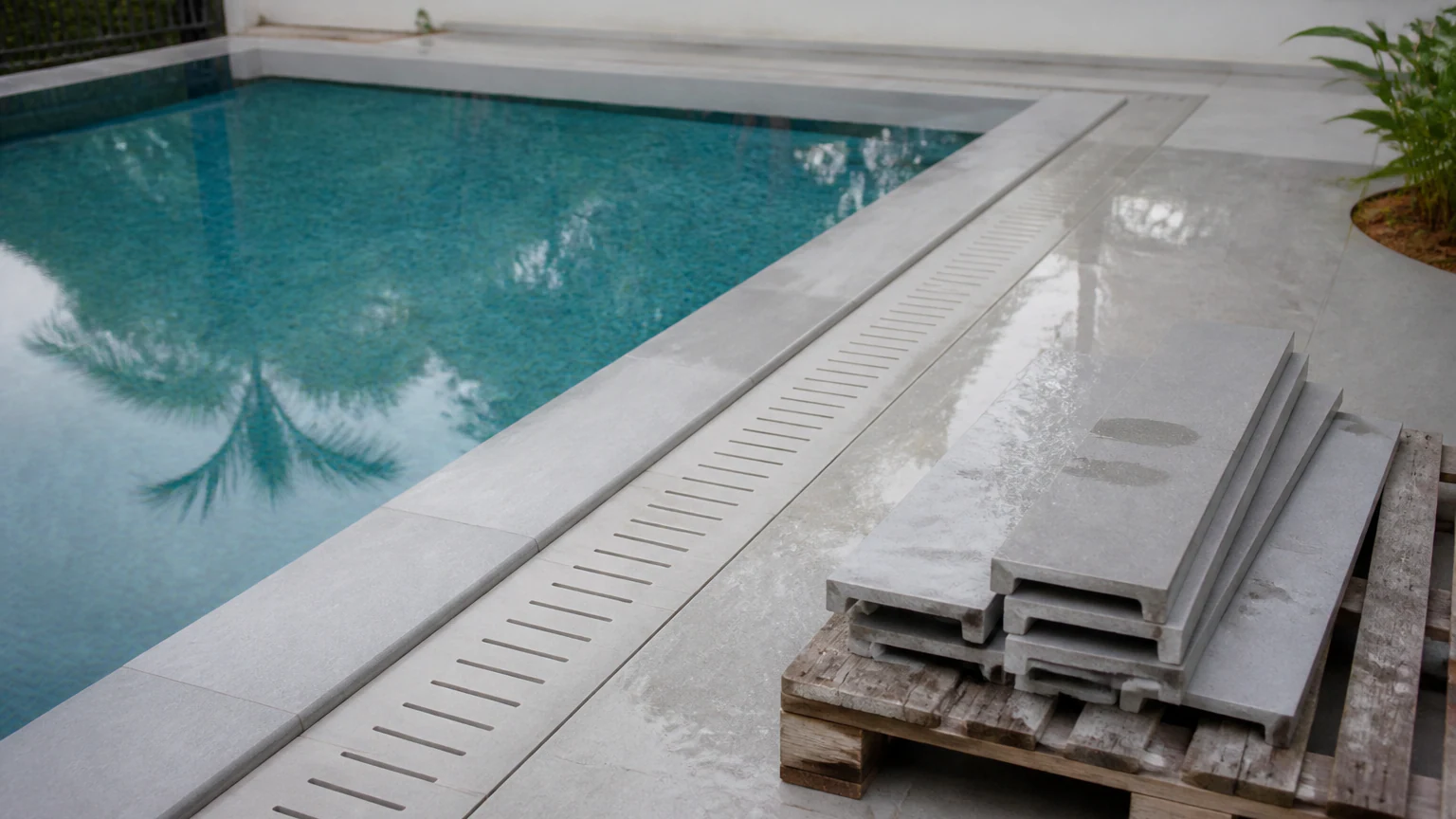
Pool coping runs all the way around the pool and covers the top of the structure. It also hides the cut edge of the pool finish, gives swimmers a firm edge to hold and sit on, and links the pool to the surrounding deck. Because people walk on it barefoot and wet, the surface has to be safe as well as attractive. For readers in Mersin, where pools are used through long, hot summers, that daily wear matters even more.
Where the typical problems begin
The first problem is usually water. A good cap has a slight fall away from the pool so that splash and rainwater are directed away from the top of the wall. When the slope is missing or wrong, water stands on the edge, stains appear and moisture reaches the structure underneath. Careful layout at the design stage prevents much of this trouble.
The second problem is a mismatch between the coping and the pool’s edge system. Skimmer pools, grated overflow pools and slot-overflow pools each need a different profile, because the cap has to sit correctly beside the water outlet. A profile chosen only for its looks may not fit the drawing. Checking the edge system first saves expensive corrections later.
Material is the third question. Natural stone and travertine are chosen for their appearance, yet they differ in porosity, sealing needs and colour from batch to batch. Concrete and pavers suit poured or block-built edges, and brick offers a traditional look. Each choice carries its own maintenance routine, so owners should weigh upkeep alongside appearance.
Porcelain has become a common answer for owners who want low porosity and consistent colour. A guide on pool coping published by Poolarch, one of the firms supplying Serapool porcelain products, describes profiles and sizes for skimmer, overflow and slot pools. The material is dense, so it tends to resist staining and water absorption. As always, the final selection must match the project drawing.
Size and corner layout deserve attention as well. Coping pieces come in set dimensions, and the way they meet at corners and curves affects both the look and the number of cuts needed. Radius corners, steps and straight runs may each call for different pieces. Measuring the whole perimeter before ordering avoids gaps and mismatched joints.
A practical way to choose
A sensible order helps. Start with the edge system, then confirm the profile that fits it, then choose the material, size and colour. Surface texture should follow, since a wet barefoot walkway needs grip. Keeping this sequence stops owners from falling for a sample that cannot actually be installed on their pool.
Samples and model-specific project quotations are useful at this stage. Holding a piece beside the deck tiles shows how colour and texture work together in daylight, which a catalogue image rarely does. Suppliers can also check the selection against the drawing. The decision still rests with the owner and the installer, who know the site best.
Good coping is rarely noticed when it works, which is exactly the goal. It protects the structure, gives a safe place to sit and hold, and frames the pool within its surroundings. Choosing by edge system, profile, material and dimensions turns a common source of frustration into a settled detail. A few careful decisions at the start keep the edge sound for years.
Link: https://www.poolarch.com